![[my] Wellness project](/assets/logos/my-wellness-project-bright-white.svg)

A practical comparison of proven natural sleep solutions — from tablets and teas to essential oils and lifestyle changes. Find what works for your body.
You've tried melatonin. You've read the sleep-hygiene articles. You've cut caffeine after lunch and installed blackout curtains. And yet, here you are at 2am, mentally reviewing tomorrow's meeting while your partner sleeps soundly beside you.
The problem isn't that natural sleep remedies don't work. The problem is knowing which ones actually deliver results, understanding how they work differently, and choosing the right approach for your specific sleep challenges. This guide cuts through the wellness noise with an evidence-based comparison of what works, what doesn't, and why.
Why natural sleep remedies?
Prescription sleep medications work by suppressing your central nervous system — essentially forcing drowsiness. Long-term use comes with significant costs: physical dependency, tolerance requiring increasing doses, next-day grogginess, and cognitive impairment.
Natural sleep remedies work differently. They use plant-based compounds to support your body's own relaxation and sleep mechanisms rather than overriding them. When you choose quality products, they're non-habit forming — you won't build tolerance, and you won't face withdrawal.
Here's what's important upfront: natural sleep remedies aren't instant fixes. Most require consistency over 2–4 weeks while your nervous system establishes new patterns, and individual responses vary. The most effective approach combines multiple elements — because your inability to fall asleep results from accumulated stress, environmental factors, circadian disruption, and behavioural patterns all intersecting at bedtime. Single-solution strategies usually fail because they only address one factor.
Five categories of natural sleep support.
1. Herbal supplements and tablets
- What it is: capsules or softgels containing valerian root, passionflower, magnesium, L-theanine, chamomile extract, or ashwagandha.
- How it works: internal biochemical support targeting neurotransmitters and stress hormones — 30–60 minutes for onset, 2–4 weeks for full benefit.
- Effectiveness: moderate to high with quality products. In Australia, look for ARTG-listed therapeutic products, assessed by the TGA for quality, safety, and efficacy.
- Best for: people who prefer taking something internally, and those with anxiety-related sleep issues.
- Limitations: quality varies widely, takes weeks to peak, and doesn't address environment or behaviour.
2. Essential oils and aromatherapy
- What it is: pure essential oils like Lavender, Cedarwood, Valerian, and Roman Chamomile — diffused or applied topically when properly diluted.
- How it works: your olfactory system connects directly to the limbic system (emotion and memory centre), so aromatic compounds signal your nervous system within seconds.
- Effectiveness: high when using pure oils in proper protocols. Research particularly supports lavender (linalool and linalyl acetate). CPTG Certified Pure Tested Grade® certification ensures purity.
- Best for: stress-related sleep issues, people wanting support throughout the day (not just bedtime), and anyone seeking non-habit-forming options.
- Limitations: quality matters enormously — synthetic oils don't work — and single oils require blending knowledge.
Lavender is traditionally used in aromatherapy to reduce symptoms of stress, which is why oils stand out: apply lavender to pulse points as stress builds during the day rather than trying to reverse 14 hours of it at 10pm.
3. Herbal teas
- What it is: chamomile, valerian, passionflower, lemon balm, or lavender teas.
- How it works: mild sedative properties plus a warm-liquid ritual — 20–30 minutes.
- Effectiveness: low to moderate; good for mild issues, insufficient for moderate to severe problems.
- Best for: people who enjoy evening rituals and those with mild or occasional sleeplessness.
- Limitations: a therapeutic dose needs 2–3 cups (and night-time bathroom trips), with highly variable potency.
4. Lifestyle and behavioural changes
- What it is: sleep hygiene (consistent schedule, dark room, cool temperature), screen reduction, caffeine timing, and an evening routine.
- How it works: supports your circadian rhythm and removes barriers to sleep — 2–4 weeks to establish.
- Effectiveness: high as a foundation; research overwhelmingly supports these practices, especially combined with other interventions.
- Best for: everyone — these are non-negotiable baseline requirements.
- Limitations: requires discipline and doesn't actively calm a racing mind or accumulated stress.
Sleep hygiene is necessary but not sufficient — it removes barriers to sleep, but it doesn't actively calm an overstimulated nervous system.
5. Diet and nutrition
- What it is: tart cherry juice, magnesium-rich foods, complex carbohydrates at dinner, and appropriate meal timing.
- How it works: supports natural melatonin production and balances blood sugar — weeks to months.
- Effectiveness: moderate and supportive; best as a long-term foundation alongside direct interventions.
- Best for: a long-term health foundation and people with diet-related sleep disruption.
- Limitations: slow to show results and doesn't address immediate stress or sleep environment.
What actually works best?
Single-solution strategies usually fail because sleep problems are multi-factorial. A melatonin supplement addresses circadian timing but does nothing for stress. Perfect sleep hygiene creates the right conditions but doesn't calm a racing mind. A calming tea provides ritual but doesn't address the 14 hours of daytime stress you've accumulated.
Research consistently shows that combined interventions outperform single approaches. Lavender aromatherapy plus magnesium supplementation proves more effective than either alone. Internal support, environmental factors, and behavioural changes together create comprehensive coverage, where each element addresses a different aspect of sleep disruption.
The foundation (non-negotiable): sleep hygiene, daytime stress management, and sensible caffeine and alcohol limits. Active support (choose based on your challenge):
- For stress-related sleep: ARTG-listed supplements plus essential oils for day and night.
- For environmental issues: aromatherapy diffusion, plus sound and temperature control.
- For habit-related issues: a consistent routine with clear transition markers.
Natural sleep remedies in Australia: quality matters.
The Therapeutic Goods Administration (TGA) regulates therapeutic products in Australia. ARTG-listed products have been assessed for safety, quality, and efficacy, and can make approved therapeutic claims such as "traditionally used in Western herbal medicine to relieve sleeplessness."
For essential oils, look for CPTG Certified Pure Tested Grade® certification — third-party purity testing of every batch, ensuring no synthetic additives, contaminants, or chemical adulterants. Quality directly correlates with effectiveness: you're using these products nightly, so contamination risk compounds and under-dosed supplements simply won't deliver therapeutic benefit.
Why essential oils work when other natural remedies don't.
Essential oils stand apart because of how quickly they work, and when. While most natural solutions only address the moment you're trying to fall asleep, essential oils support you throughout the entire day–night cycle.
Speed of action
When you inhale lavender or apply it topically, aromatic compounds reach your brain within seconds — no digestion, no waiting for bloodstream absorption. When you're lying in bed at 11pm with a racing mind, 30 minutes feels like an eternity.
Dual-timeline support
Your sleep problems don't start at bedtime. They start at 2pm when your shoulders tense during a difficult meeting, at 4pm when you're juggling deadlines, at 6pm during family logistics. By the time you take a supplement at 10pm, you're trying to reverse 14 hours of accumulated stress in a 30-minute window. A lavender roll-on applied as stress builds interrupts that cycle before it compounds — so at night you're not starting from high alert.
This is the difference between reactive and proactive sleep support: managing stress as it happens, not trying to undo it all at bedtime.
Multi-modal delivery
Essential oils are the only natural remedy you can use in multiple ways — diffused (environmental), topical (concentrated), and internal (in food-grade formats like softgels). They adapt to what you need, when you need it. Lavender's linalool and linalyl acetate have been studied extensively for their effects on the nervous system, and unlike pharmaceutical aids, oils don't build tolerance.
The catch? Which oils, in what ratios, diluted how, applied or diffused when? Most people buy a bottle of lavender, diffuse it once or twice, don't notice dramatic results, and give up. The problem isn't the oils — it's the lack of a complete protocol. Sleep support requires a system, not a single product.
The complete natural sleep system.
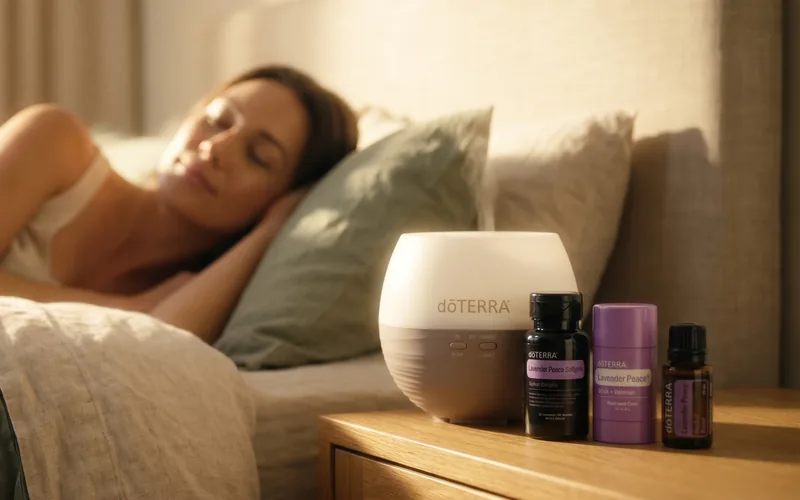
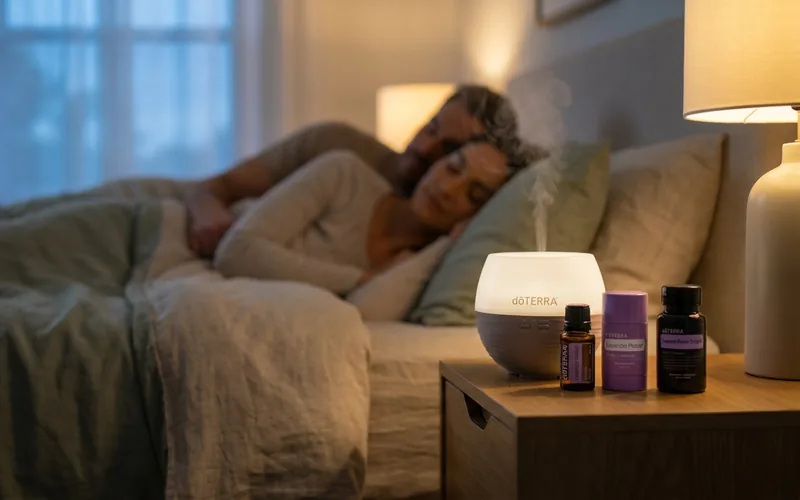
The Sleep Well Pack combines the most effective remedy types — ARTG-listed supplements plus research-backed aromatherapy — addresses both daytime stress and night-time environment, and removes the guesswork from essential-oil use. It's a four-step protocol that works across different touchpoints through your day and night.
- Step 1 — Lavender Peace Softgels (30 minutes before bed). An ARTG-listed therapeutic wellness supplement combining CPTG® lavender essential oil with L-theanine, tart cherry, lemon balm, passionflower, and chamomile. Traditionally used in Western herbal medicine to decrease, reduce, and relieve sleeplessness — with no next-day grogginess.
- Step 2 — Lavender Peace Stick + Valerian (as you get into bed). Apply to wrists, neck, chest, and feet for a soothing, calming aroma during the sleep transition — your signal that the day is done.
- Step 3 — Lavender Peace Restful Blend (diffuse through the night). A proprietary blend of lavender, cedarwood, ho wood, ylang ylang, marjoram, Roman chamomile, vetiver, vanilla, and Hawaiian sandalwood. Add 3–4 drops to your diffuser.
- Step 4 — Lavender Touch Roll-On (throughout the day). Pre-diluted lavender, ready to use on pulse points as stress builds. Traditionally used in aromatherapy to reduce symptoms of stress.
Most people only address one or two steps — but sleep problems require internal support, environmental factors, and daily stress management working together. The pack includes the Lavender Peace Softgels (ARTG-listed), Lavender Peace Stick + Valerian, Lavender Peace Restful Blend (15 mL), Lavender Touch Roll-On, and the Petal Diffuser 2.0.
Sleep Well Pack with Petal Diffuser 2.0: $237 (inc. GST) — with free dōTERRA Wholesale Membership and free shipping, no monthly commitments or autoship.
The Sleep Well Pack uses ARTG-listed therapeutic products and CPTG-certified essential oils. Always read the label and follow the directions for use.
Common questions.
What natural sleep aid is best?
For stress-related sleep problems (racing mind, difficulty unwinding), essential oils combined with ARTG-listed supplements tend to be most effective. For habit-based issues, behavioural changes form the foundation. For mild sleeplessness, herbal teas or single supplements might suffice. For most people, the best approach combines good sleep hygiene, active internal support, and aromatherapy.
Do natural sleep aids work?
Yes — when you use quality products consistently. A synthetic fragrance oil has zero therapeutic value and an under-dosed supplement won't work, but ARTG-listed therapeutic products, CPTG-certified essential oils, and proper protocols are backed by research. Most natural remedies work cumulatively — expect 2–4 weeks of consistent use before evaluating results.
Are natural sleep aids safe?
Generally safer than pharmaceutical sleep medications, but "natural" doesn't automatically mean "safe for everyone." Choose ARTG-listed products where available, look for CPTG certification for essential oils, follow usage directions exactly, and inform your doctor about all supplements you use. Always read the label and follow the directions for use.
How long do natural sleep remedies take to work?
Essential oils work quickly via the olfactory response. Supplements take 30–60 minutes for onset and 1–2 weeks for full effect. Lifestyle changes take 2–4 weeks. A complete approach provides both immediate support (essential oils) and cumulative benefit (ARTG-listed softgels), plus daytime stress prevention.
Can you use natural sleep aids every night?
CPTG-certified essential oils and ARTG-listed herbal supplements (when used as directed) are safe for nightly use and non-habit forming. Your olfactory receptors continue responding to aromatic compounds even with long-term use.
What's the difference between natural sleep aids and sleep tablets?
Sleep tablets suppress your central nervous system and force drowsiness, which can create dependency, tolerance, and next-day grogginess. Quality natural aids support your body's own mechanisms instead, are non-habit forming, and let you wake feeling refreshed.
Find your natural sleep solution.
- If you can't fall asleep (racing mind): essential oils for daytime stress interruption, ARTG-listed supplements, and topical aromatherapy during the sleep transition. Start with the Sleep Well Pack.
- If you can't stay asleep (wake during the night): ambient aromatherapy through the night, internal therapeutic support, and an optimised sleep environment. Start with the Sleep Well Pack (Steps 1 and 3).
- If you wake unrefreshed: a complete system addressing multiple factors — plus a medical assessment to rule out sleep disorders. Start with the full 4-step protocol.
Whatever your challenge, the sequence is the same:
- Establish a sleep-hygiene baseline (consistent schedule, dark room, cool temperature).
- Choose quality products (ARTG-listed, CPTG-certified).
- Give it two weeks of consistent use before evaluating.
- Adjust as needed, or step up to a comprehensive system.
Natural sleep remedies work best as part of a comprehensive approach. The foundation is always good sleep hygiene — but for most people that's not enough to overcome accumulated stress and nervous-system activation. The most effective protocols combine that foundation with active support, and the Sleep Well Pack provides exactly that combination in one complete system.