![[my] Wellness project](/assets/logos/my-wellness-project-bright-white.svg)
Aromatic
Diffusion disperses oil molecules into the air, creating an aromatic environment throughout your bedroom. The easiest starting point for most people.

Practical guidance on choosing, using, and combining essential oils for natural sleep support — without the sales pitch.
If you're lying awake at 2am with racing thoughts, tossing and turning, or relying on sleep medications you'd rather avoid, essential oils offer a natural alternative. Here's everything you need to know about using pure plant extracts to support better sleep.
One in three Australians struggles with sleep — whether it's difficulty falling asleep, staying asleep, or waking feeling unrested. The causes vary: stress from work, racing thoughts at bedtime, physical tension, or simply the accumulated sleep debt of modern life.
Many people hesitate to use pharmaceutical sleep aids, and the concerns are valid: morning grogginess, dependency risks, side effects that sometimes feel worse than the original problem. Essential oils offer a different approach — concentrated plant extracts, used in traditional wellness practices for centuries, that create calming aromatic environments and support relaxation rituals. The appeal is straightforward: a pleasant experience, no grogginess, multiple application methods, and the ability to customise based on your specific sleep challenges.
Essential oils are concentrated extracts from plants — flowers, leaves, bark, roots — captured through steam distillation or cold pressing. A single drop of peppermint oil equals roughly 28 cups of peppermint tea in aromatic potency. This concentration makes them powerful tools when used correctly.
When you inhale essential oils, aromatic compounds travel through your nose to olfactory receptors, which send signals directly to your limbic system — the brain's emotional and memory centre. Your sense of smell is the only sense directly connected to this control centre, which explains why certain aromas trigger immediate emotional or physiological responses.
Quality matters: not all oils are equal. CPTG® (Certified Pure Tested Grade) is a quality standard requiring third-party testing and batch verification — confirming the oil contains the correct aromatic compounds at therapeutic concentrations, with no fillers, contaminants, or synthetic additives. Cheap oils consistently disappoint not because essential oils don't work, but because those particular oils aren't actually pure.
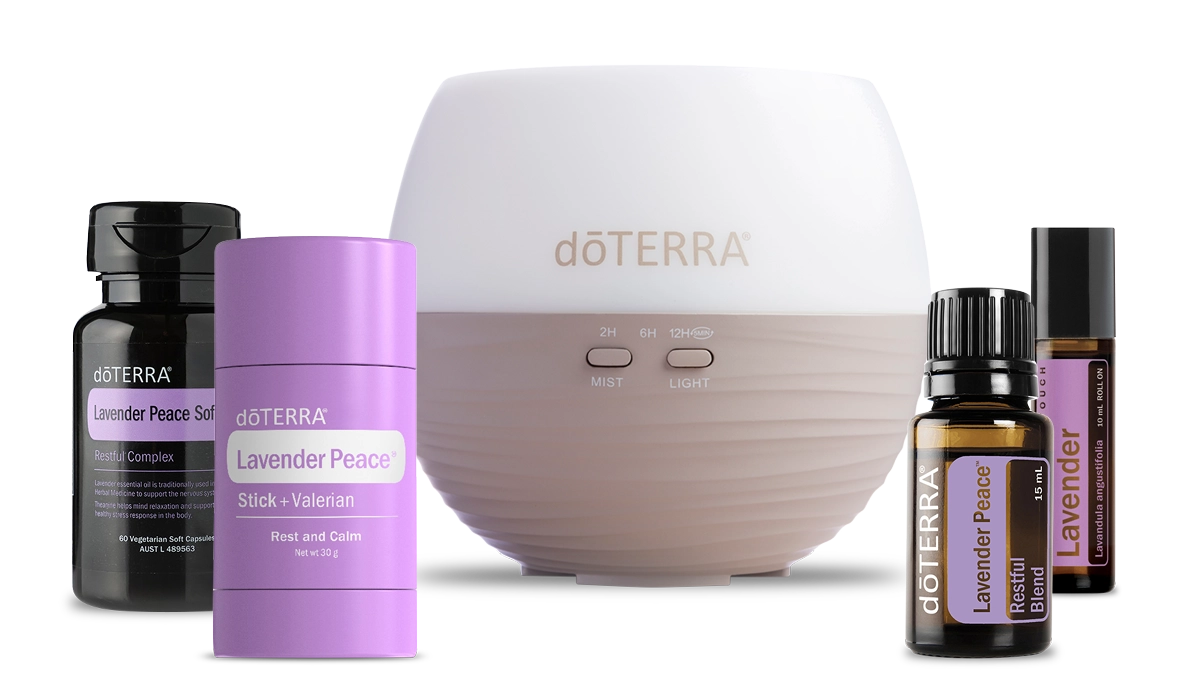
Diffusion disperses oil molecules into the air, creating an aromatic environment throughout your bedroom. The easiest starting point for most people.
Diluted oils applied to skin allow absorption while providing localised aromatic benefit — wrists, temples, the back of the neck, or the soles of the feet.
Some essential oils are available as ARTG-listed supplements, such as Lavender Peace Softgels, which combine essential oils with complementary herbal ingredients.
Not all essential oils promote sleep — some are energising. These are the most effective for sleep support, based on traditional use and emerging research.
Soft, floral, slightly herbaceous
The most researched essential oil for sleep. Traditionally used in aromatherapy to relieve sleeplessness, reduce symptoms of stress, and relieve nervous tension.
Best for: general sleep support, stress-related sleep issues, and anyone new to essential oils.
Deep, earthy, grounding, woody
Often called "the oil of tranquillity." Its thick, earthy aroma helps quiet racing thoughts and mental overactivity at bedtime.
Best for: racing thoughts, difficulty "switching off," and analytical minds that struggle to disengage.
Warm, woody, slightly sweet
Creates a peaceful, forest-like atmosphere. Pairs exceptionally well with lavender, softening its floral notes while adding depth and warmth.
Best for: creating a peaceful environment, physical tension, and those who prefer woody over floral aromas.
Sweet, apple-like, fresh, herbaceous
A gentle, calming aroma similar to chamomile tea but more concentrated. Its mildness makes it suitable for children's rooms (with supervision).
Best for: tension, irritability, and those who prefer subtle, sweet aromas.
Citrus yet calming, fresh, slightly floral
Unlike most citrus oils, bergamot's unique chemistry is both uplifting and calming — valuable for sleep difficulties that stem from anxiety or work stress.
Best for: stress-related sleep issues, anxiety, and tension from overwork.
Sweet, floral, exotic, slightly fruity
A rich, exotic aroma that creates a luxurious, calming sensory experience. Powerful in small amounts — a little goes a long way.
Best for: physical tension, a racing heart before sleep, and rich floral aromas.
Lavender, cedarwood, ylang ylang, marjoram, Roman chamomile, vetiver, vanilla, Hawaiian sandalwood
A professionally formulated blend of eight essential oils selected for their complementary properties — a complete aromatic solution in one bottle, no blending required.
Best for: comprehensive sleep support and a consistent nightly ritual. Part of the Sleep Well Pack.
Mild, woody, slightly sweet, subtle
Notably mild, which makes it an excellent supporting oil — enhancing other oils in a blend without overpowering them.
Best for: enhancing other oils, gentle support, and those sensitive to strong aromas.
Quick reference — which oil for which issue?
Blending creates synergistic effects — the combined impact exceeds individual oils alone. After consistent use, your brain begins associating that specific aromatic combination with sleep preparation.
Floral lavender provides the calming foundation, woody cedarwood adds warmth, and earthy vetiver grounds the blend. Add to your diffuser 30 minutes before bed.
Calming florals combine with uplifting citrus to address stress-related sleep issues. Diffuse or apply (diluted) to wrists and temples 15–30 minutes before bed.
For consistency without experimentation: an eight-oil blend in optimal ratios, CPTG® certified for purity across batches. Available as a 15mL diffuser bottle and a convenient stick format.
Explore the Sleep Well Pack →Choose the method that fits your lifestyle — most people benefit from combining a few for comprehensive support.
Add 3–5 drops to your diffuser's reservoir and run it 30–60 minutes before bed, 2–3 feet from your bed. Creates environmental cues your brain learns to read as "sleep time," and benefits both partners in a shared bed. The Petal Diffuser 2.0 in the Sleep Well Pack offers ultrasonic diffusion with optional LED lighting and timer settings.
Always dilute — 1–2 drops with a teaspoon of carrier oil — then apply to wrists, temples, the back of the neck, or the soles of the feet 15–30 minutes before bed. Patch-test new oils first. Pre-diluted options like Lavender Touch and the Lavender Peace Stick + Valerian skip the mixing step.
Add 1–2 drops to a pillowcase corner (away from direct facial contact), or mix a linen spray — 10 drops oil + 2 tbsp witch hazel + 1 cup distilled water — and mist sheets a few minutes before bed. Continuous, gentle aromatic exposure through the night.
A warm bath (38–40°C) about an hour before sleep triggers a natural temperature drop afterwards that signals your brain it's time to rest. Mix 3–5 drops with a cup of Epsom salts or a tablespoon of carrier oil (oils don't dissolve in water alone), then soak 15–20 minutes.
Pre-diluted roll-ons need no mixing — apply to pulse points and inhale slowly 3–5 times. Travel-friendly and fool-proof, ideal for busy or irregular schedules. Lavender Touch and the Lavender Peace Stick + Valerian are both ready to use.
Essential oil safety
Always read the label and follow the directions for use.
Essential oils aren't the only natural sleep solution. Here's where they fit — and they often work best alongside other approaches rather than replacing them.
| Solution | How it works | Pros | Cons | Best for |
|---|---|---|---|---|
| Essential oils | Aromatic compounds interact with the limbic system | No side effects, pleasant, flexible, multiple methods | Requires consistency; quality matters; response varies | Gentle, natural aromatic support without pharmaceuticals |
| Melatonin | Hormone supplementation signals circadian rhythm | Direct biochemical effect, fast-acting for some | Morning grogginess, doesn't address root causes | Jet lag, shift work, short-term use |
| Herbal teas | Calming herbs via ingestion | Gentle, creates ritual, pleasant | Limited potency, bathroom trips, slower acting | A gentle, ritual-based approach |
| Sleep medications | Pharmaceutical sedation of the nervous system | Powerful, fast-acting, reliable sedation | Grogginess, dependency, doesn't improve quality long-term | Short-term use under medical supervision |
| Magnesium | Mineral supports muscle and nervous system function | Evidence-based, safe long-term, broad benefits | Daily supplementation, not immediate | Magnesium deficiency, physical tension |
Essential oils work well alongside other approaches. The Sleep Well Pack, for example, combines aromatic support with internal supplementation — Lavender Peace Softgels contain lavender essential oil plus L-theanine, tart cherry, lemon balm, passionflower and chamomile for comprehensive, multi-pathway support.
Even the best oils can't overcome irregular schedules, bright bedroom lighting, or late-night caffeine. The basics remain non-negotiable: a consistent schedule, a cool (18–20°C) dark room, no screens an hour before bed, and a caffeine cut-off after 2pm. What oils do is make those healthy habits pleasant rather than merely disciplined.
CPTG® Lavender essential oil with L-theanine, tart cherry, lemon balm, passionflower and chamomile (ARTG 489563). Traditionally used in Western herbal medicine to relieve sleeplessness and support a healthy stress response.
Wrists, temples, the back of the neck — the convenient stick format provides the Lavender Peace blend plus valerian root, no dilution required.
Using the Petal Diffuser 2.0, creating a calming aromatic environment throughout your bedroom.
Apply to manage stress as it accumulates — preventing build-up rather than trying to undo 14 hours of tension at bedtime.
Always read the label and follow the directions for use.

The Sleep Well Pack combines CPTG® essential oils with proven herbal supplements in a complete 4-step system — without the guesswork.
Lavender is the most researched and widely used — traditionally used in aromatherapy to relieve sleeplessness — and an excellent starting point. But "best" depends on your challenge: vetiver excels for racing thoughts, bergamot for stress-related sleep issues, and cedarwood for physical tension. The Lavender Peace Restful Blend combines multiple oils so you don't have to experiment with ratios. Start with lavender if you're uncertain.
Yes, when used properly. Aromatic diffusion is safe for nightly use indefinitely, and properly diluted topical application is safe long-term. CPTG® certified oils are tested for purity. Consider rotating between oils or blends to keep your sensory experience fresh and prevent your brain filtering out a familiar aroma.
Traditional use across thousands of years in multiple cultures suggests genuine benefits, and emerging research supports this — particularly for lavender. Essential oils aren't pharmaceutical sleep aids; they create aromatic environments that support relaxation and sleep onset. Individual responses vary, and nightly use for 2–3 weeks often shows better results than occasional use as your brain builds associations between the aroma and sleep.
Generally yes, when used correctly. Aromatic diffusion is safe for most people; topical application requires dilution with a carrier oil. Avoid use during pregnancy without consulting a healthcare professional, keep oils away from children, and avoid contact with eyes (flush with carrier oil, not water). Always read product labels and follow the directions for use.
Avoid stimulating oils that promote alertness: peppermint, eucalyptus, rosemary, lemon, grapefruit and sweet orange. The exception is bergamot, which is uniquely calming despite being a citrus oil. Stick to grounding, floral and woody oils — lavender, vetiver, cedarwood, Roman chamomile, ylang ylang, sandalwood, marjoram and clary sage.
Absolutely — blending creates synergistic effects. Start simple with 2–3 oils rather than five or six, and use more drops of your primary oil and fewer of supporting oils so no single aroma dominates. Pre-made blends like Lavender Peace offer professional ratios and CPTG® quality without the guesswork.
For topical use (always diluted): pulse points (wrists, temples, back of neck), the soles of the feet (high absorption, away from the face), and the chest (close to the nose as you breathe). For diffusion, place the diffuser 2–3 feet from the bed. Avoid undiluted oils directly on pillows where your face will contact them.
Diffusion: start 30–60 minutes before bedtime. Topical: apply 15–30 minutes before lying down. Internal: Lavender Peace Softgels are taken 30 minutes before bed. Consistent timing creates ritual — your brain begins anticipating sleep when you perform these actions at regular times. Always read the label and follow the directions for use.
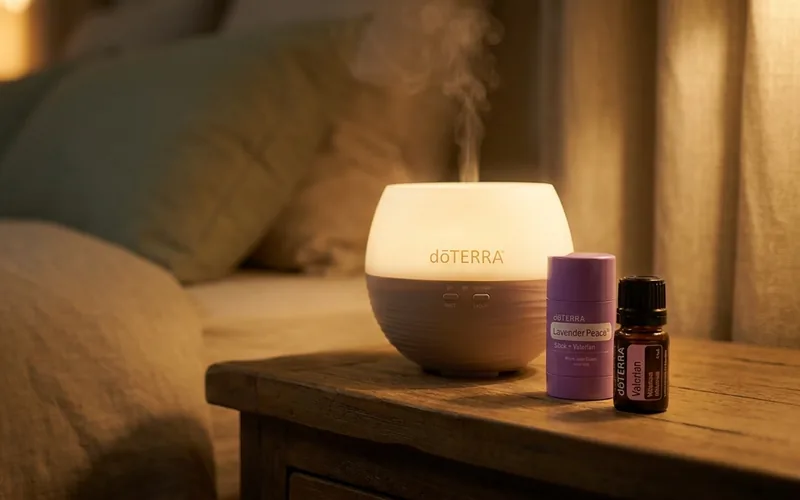
Why valerian has been used since ancient times to create a calming bedtime atmosphere.
Read the guide →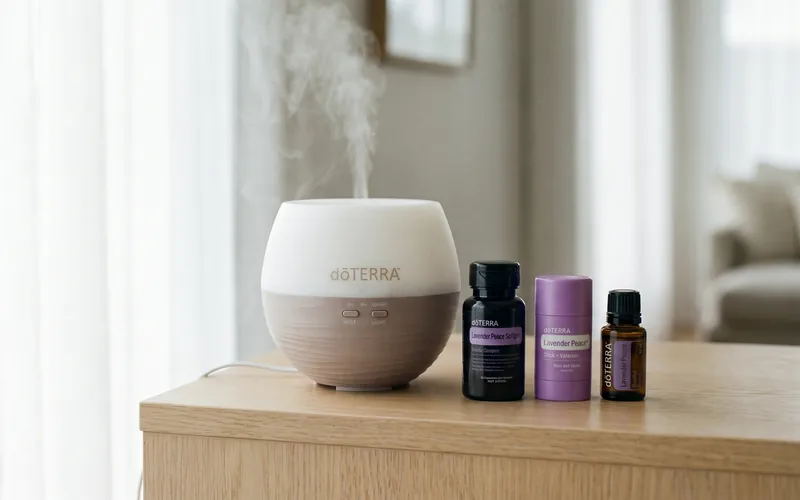
The natural options Australians can use to reclaim restful, restorative sleep.
Read the guide →Five premium dōTERRA products in one complete evening ritual — delivered to your door.
See what's inside →This guide provides educational information about essential oils for sleep support based on traditional use and emerging research. It does not replace medical advice. If you experience sleep difficulties lasting more than three months, consult a healthcare professional. Always read the label and follow the directions for use.