![[my] Wellness project](/assets/logos/my-wellness-project-bright-white.svg)

Application location matters more than most people realise — not because certain body parts are "magic," but because your skin's thickness, blood flow, and proximity to your respiratory system all affect how quickly you experience aromatic benefits.
Pulse points deliver immediate aromatic presence. The bottoms of the feet provide safe, generous application zones. Your chest creates an aromatic envelope with every breath. Each location serves a specific purpose. This guide covers the most effective application points, practical techniques you can use tonight, proper timing across your day and evening, and the safety considerations that protect your skin while maximising benefit.
Why location matters for topical aromatherapy.
Essential oils work through two pathways: topical absorption through your skin, and aromatic inhalation through your respiratory system. The point you choose determines which pathway dominates — and how quickly you feel the effect. Thinner skin (wrists, temples, neck) absorbs faster but is more sensitive; thicker skin (the bottoms of the feet, palms) tolerates more but absorbs more slowly; warmer areas (chest, neck) diffuse aroma more strongly from body heat.
The best points balance three factors: skin permeability, aromatic proximity, and safety. When you apply to pulse points near your face — wrists that rest near your pillow, temples, the back of the neck — you're not just absorbing topically, you're creating an aromatic environment that surrounds you all night, where every breath reinforces the calming experience. It's why where you apply affects results more than how much.
The most effective locations for sleep essential oils.
Pulse points — wrists, temples, and neck
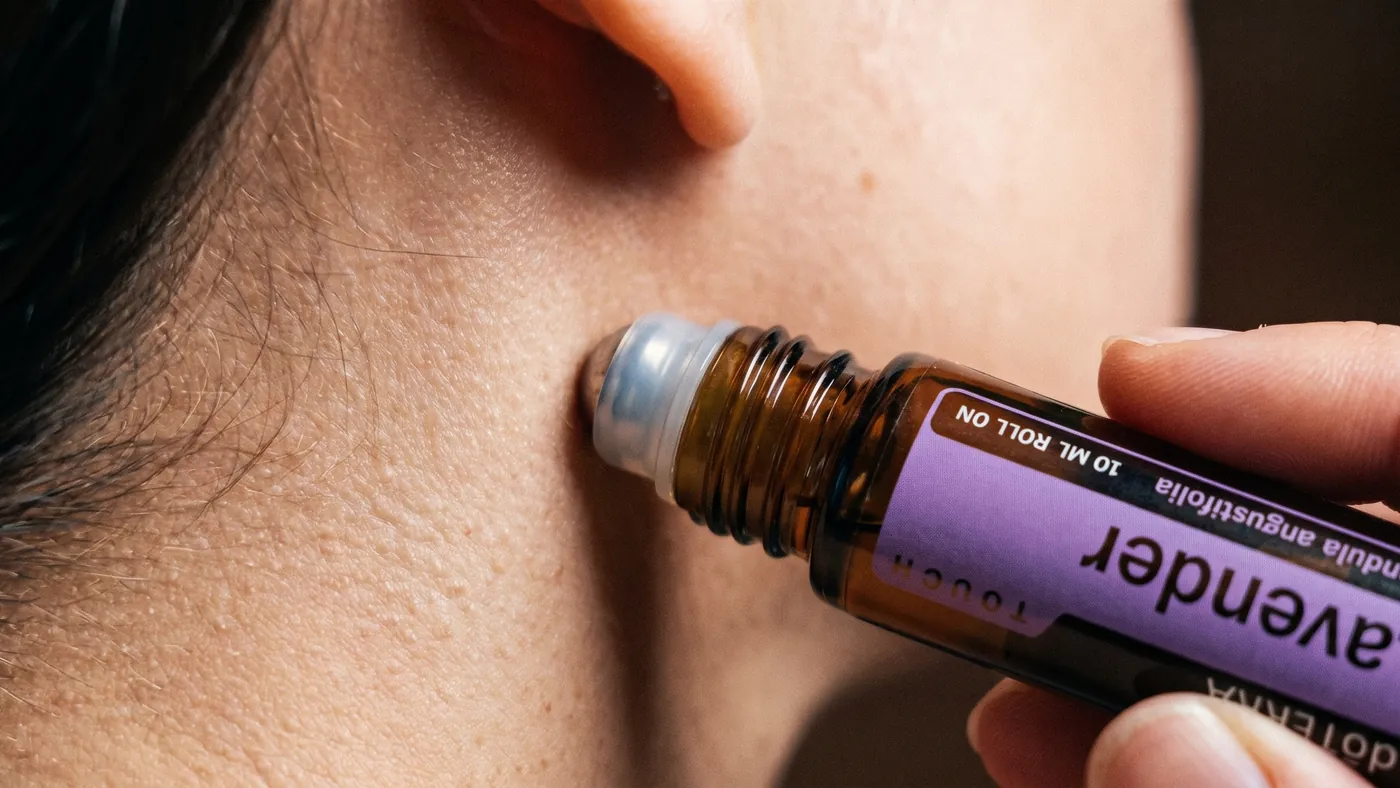
- Inside wrists — thin skin and strong blood flow, naturally close to your face when your hands rest near the pillow. Apply 1–2 drops of properly diluted oil (or a roll-on) with gentle circular motions; you'll breathe in the aroma as you settle in.
- Temples — direct proximity to the sinuses means immediate inhalation with every breath. Use very gentle circular motions, only ever with pre-diluted oils, always avoiding the eye area.
- Back of the neck — body heat diffuses the aroma upward toward your pillow, and it addresses tension that accumulates in the neck and shoulders. Apply at the base of the skull and across the upper shoulders.
Bottoms of the feet — the most versatile zone
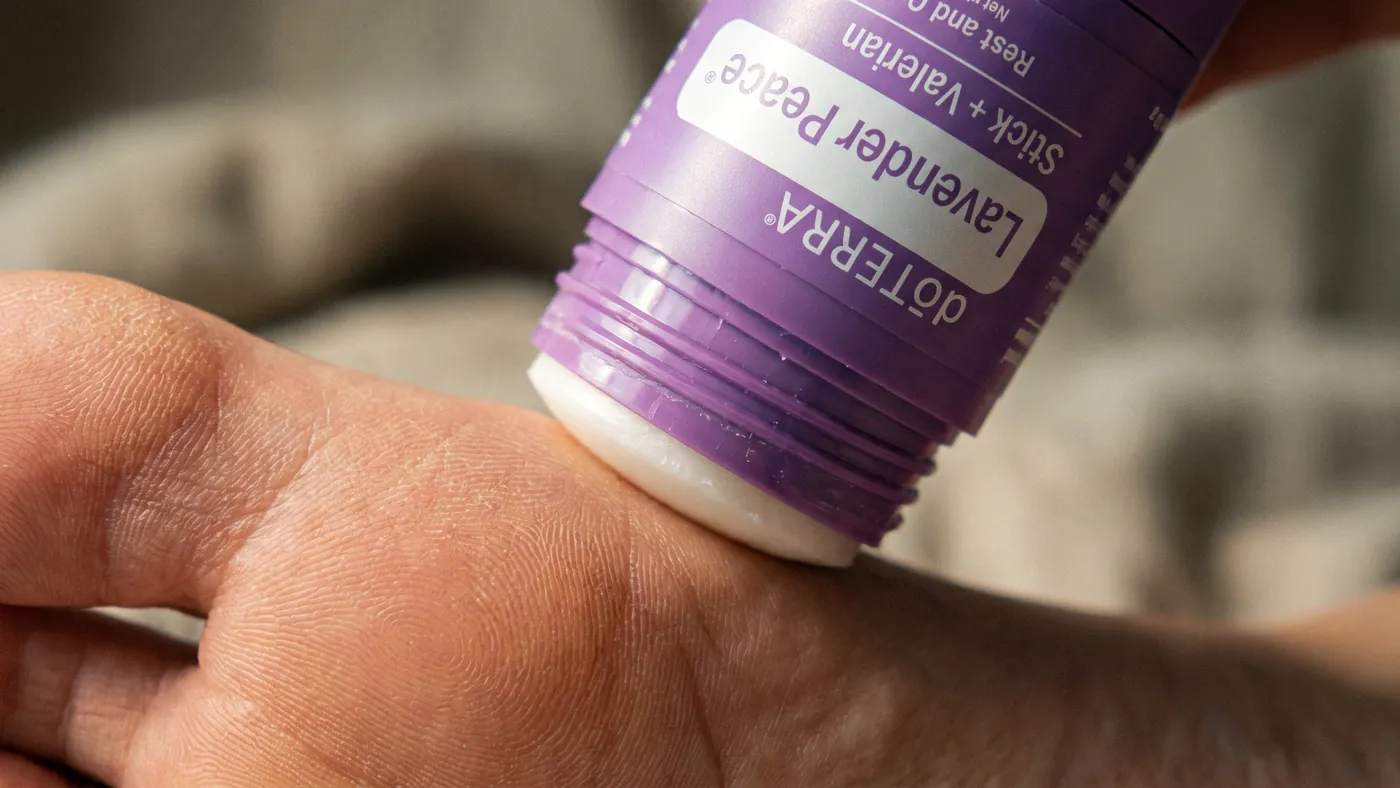
Thicker skin tolerates generous application, the large surface area allows comprehensive coverage, low sensitivity means minimal irritation risk, and there's no risk of accidental eye contact during sleep. Apply across the entire sole — arch, ball, and heel — as you physically get into bed, so it becomes part of your bedtime ritual and builds an aromatic-anchoring effect over time. The Sleep Well Pack protocol recommends the bottoms of the feet as a primary point for exactly these reasons.
Chest and upper torso — direct aromatic delivery
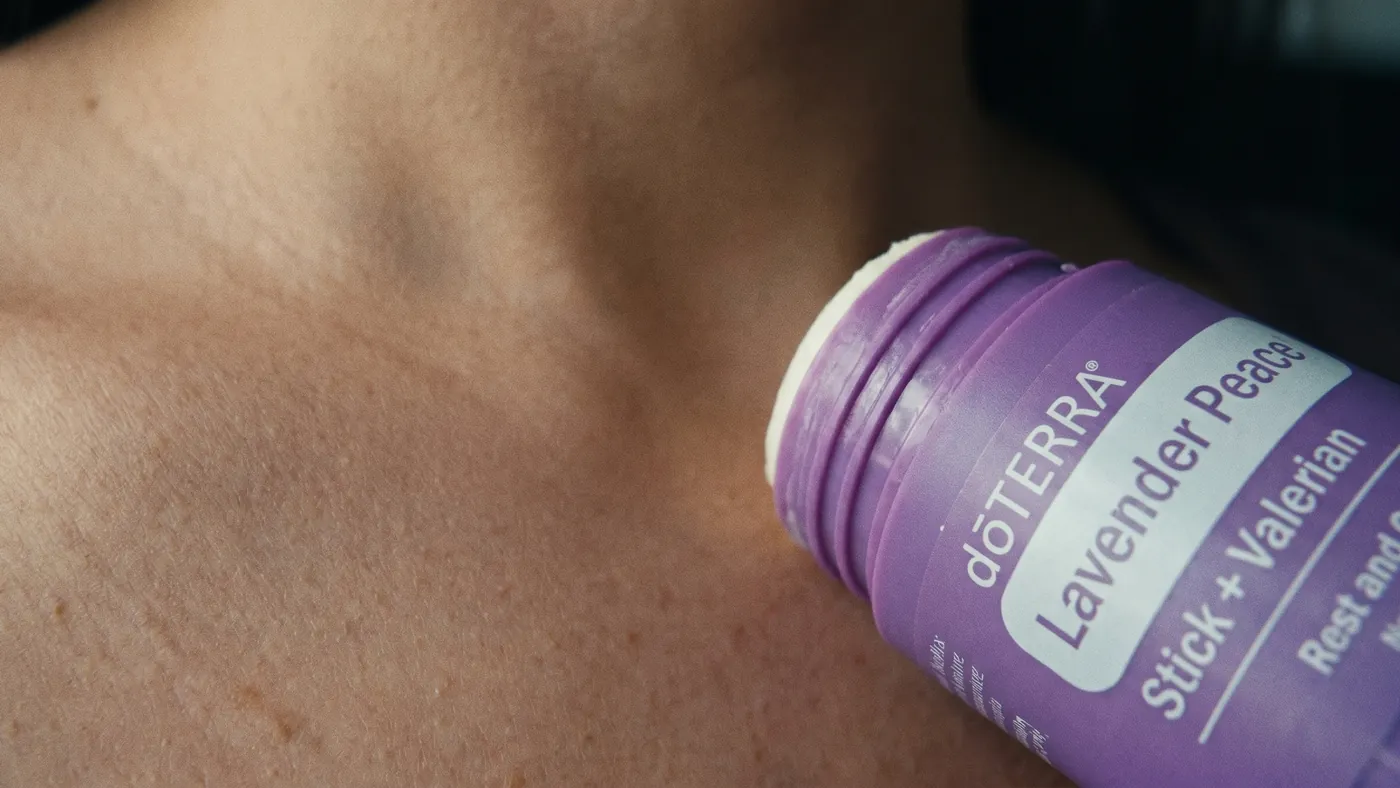
Applying to the upper chest, below the collarbone, creates an "aromatic envelope" — your chest rises and falls with each breath, continuously diffusing the compounds toward your respiratory system. Use gentle circular motions with properly diluted products. Some people find chest application too strong, especially if sensitive to strong aromas — if you're new to it, start with a small amount.
How to apply for consistent results.
Roll-on
Pre-diluted products like Lavender Touch are ready to use — apply directly in gentle circular motions on pulse points, no carrier oil needed, safe for temples, wrists, neck, and behind the ears. Lavender is traditionally used in aromatherapy to reduce symptoms of stress, so a roll-on lets you apply through the day when tension builds — the prevention strategy that makes your night-time routine work.
Stick
Products like the Lavender Peace Stick + Valerian glide on smoothly without oily residue. Apply to multiple points as you get into bed — wrists, neck, chest, bottoms of the feet. The aromatic-anchoring effect develops through consistency: same product, same way, every night, until the aroma becomes a signal that it's time to rest.
Creating your own diluted blends
- Dilution: adults 2–3% (12–18 drops per 30 mL carrier); sensitive skin 1% (6 drops per 30 mL); face and neck 1% maximum.
- Carrier oils: fractionated coconut (odourless, fast-absorbing), sweet almond (gentle), or jojoba (long shelf life).
- Tips: mix in a glass roller bottle, patch-test the inside wrist 24 hours ahead, store cool and dark, and label with contents and ratio.
DIY is absolutely doable if you enjoy the process — but it takes knowledge and experimentation. Pre-formulated products like those in the Sleep Well Pack arrive ready to use, properly diluted, with clear application instructions.
When to apply for maximum benefit.
Timing turns essential oils from "something you use occasionally" into a system. The most effective protocols use strategic timing across the whole day and evening — not just at bedtime.
Day — manage stress before bedtime
Your sleep problems don't start at 10pm; they start at 2pm as stress compounds. Apply through the day when stress shows up — before difficult meetings, during the commute, when tension gathers in your shoulders or jaw. Managing stress as it accumulates means you're not trying to undo 14 hours of tension in a 30-minute evening routine. The Sleep Well Pack includes Lavender Touch specifically for this discreet daytime use.
Evening wind-down — 30–60 minutes before sleep
Begin building your sleep atmosphere before you're in bed. Apply to wrists and temples as you start your wind-down, paired with other cues — dimming lights, less screen time, comfortable clothing. Consistently pairing the same aroma with the same routine teaches your brain to associate that scent with winding down.
Bedtime — the final ritual
As you get into bed is your most generous moment: liberal application to the bottoms of the feet, plus the back of the neck, inside wrists, and upper chest if desired. If you took Lavender Peace Softgels 30 minutes prior, they're working internally while you create the external aromatic environment — the combination that creates optimal conditions for rest.
The physical act of applying oils as you settle into bed becomes a repeatable pattern your body learns to recognise — the final cue that it's time to sleep.
Essential oil safety for topical sleep use.
Always: use pre-diluted products on the face, neck, and sensitive areas; patch-test new products on the inside wrist 24 hours ahead; follow label directions for ARTG-listed products; discontinue use if irritation occurs; and wash your hands after applying, before touching eyes or face.
Never: apply undiluted oils to skin unless the label specifically says it's safe neat; apply near eyes or mucous membranes; use products you're sensitive to; or apply to broken, damaged, or inflamed skin.
Special care: consult your healthcare provider before use during pregnancy or nursing, for children under 12 (use significantly lower dilutions), for sensitive skin conditions, or if you take medications that may interact. Always read the label and follow the directions for use.
Pre-formulated products vs creating your own blends.
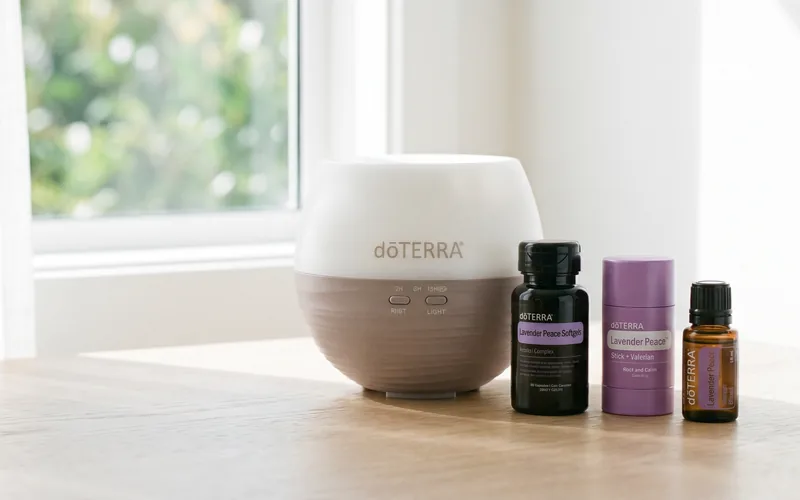
Both approaches work — the difference is time, knowledge, and margin for error. The Sleep Well Pack includes everything for topical application across points and timing: the Lavender Peace Stick + Valerian (ready to apply to wrists, neck, chest, and feet), Lavender Touch Roll-On (pre-diluted lavender for daytime pulse points), and the Lavender Peace Restful Blend (for diffusion). Each is designed for specific points and timing within the 4-step protocol — no measuring, no dilution maths, CPTG® Certified Pure Tested Grade quality throughout.
The DIY path gives you complete control: individual oils (lavender, valerian, cedarwood, Roman chamomile), carrier oils, glass roller bottles, measuring tools, and a working knowledge of safe dilution and synergistic blending. It can be cost-effective if you're experienced and enjoy formulating — but it requires time and trial and error to get reliable results. For most people, a pre-formulated system delivers consistent results from night one.
Application mistakes that reduce effectiveness.
- Undiluted oils on sensitive areas — face, neck, and inner wrists need pre-diluted products or proper 1–2% dilutions; neat oils can irritate.
- Inconsistent application — random points and timing prevent aromatic anchoring. Pick your points and time, and keep them for at least 14 days.
- Only applying at bedtime — you miss the daytime prevention that makes the night routine work. Use a roll-on as tension builds through the day.
- Wrong carrier oil — heavy or strongly scented carriers compete with the aromatics. Use odourless, fast-absorbing options like fractionated coconut or sweet almond.
- Applying then immediately covering — give oils 2–3 minutes to absorb and start diffusing before covering with clothing or blankets.
Get location, quality, timing, technique, and consistency right and the whole approach works better. You can build your own — or use a pre-formulated system designed for exactly this. The Sleep Well Pack's 4-step protocol uses strategic timing and application points across the day and night, with clear guidance for each product.