![[my] Wellness project](/assets/logos/my-wellness-project-bright-white.svg)

When anxious thoughts keep you awake, aromatherapy offers a natural approach to calm your mind and support better rest.
You know the pattern. The day ends, you finally get into bed, and suddenly your mind replays every conversation, decision, and worry from the past 14 hours. The harder you try to sleep, the more alert you become. This isn't insomnia in the traditional sense — it's anxiety preventing your nervous system from downshifting into rest.
Sleep tablets might force drowsiness, but they don't address the underlying tension. Essential oils work differently: used correctly, aromatherapy can help manage daytime anxiety before it accumulates and create the calm environment your body needs for natural sleep. It's not about forcing your mind to shut down — it's about removing the barriers that prevent rest in the first place.
Why anxiety disrupts sleep (and why sleep tablets miss the point).
Anxiety and sleep operate on incompatible nervous-system states. Sleep requires parasympathetic activation — your "rest and digest" mode, where heart rate slows and muscles release. Anxiety activates the sympathetic "fight or flight" response, designed to keep you alert. When you're anxious, your body reads racing thoughts as signals of danger and stays vigilant — you can't simply decide to sleep any more than you can decide to lower your heart rate on command.
The cognitive loop makes it worse: anxious thoughts trigger physical tension, which reinforces the sense that something's wrong, which generates more anxious thoughts. Sleep tablets suppress this through central-nervous-system depression — they sedate the brain but don't resolve the anxiety, so you wake groggy and the anxiety is still there tomorrow. And poor sleep increases anxiety sensitivity the next day, making the following night harder — a compounding cycle.
How aromatherapy addresses anxiety and sleep together.
The science of aromatic anchoring
Essential oils support sleep through aromatic anchoring: consistently pair specific aromas with your bedtime routine and your brain begins associating those scents with the transition to rest. This is classical conditioning applied to sleep hygiene — just as dimming the lights signals bedtime, a consistent calming aroma trains your nervous system to recognise the ritual, beginning the transition before you even get into bed.
Chemical constituents that support calm
Certain oils contain compounds with calming properties. Lavender, for example, contains high concentrations of linalool. When inhaled, these aromatic molecules interact with your olfactory system, which connects directly to the limbic system — the brain's emotional and stress-response centre. The constituents aren't just pleasant scents; they're active compounds that interact with your nervous system through inhalation and topical absorption.
Why both daytime and night-time application matter
Your sleep problems don't start at 10pm — they start at 2pm as your stress response accumulates. By bedtime you're trying to reverse 14 hours of physiological tension in a 30-minute routine. The most effective approach manages anxiety throughout the day before it compounds, then creates optimal conditions for rest at night — proactive management rather than reactive intervention.
The most effective essential oils for calming anxiety and supporting sleep.
Lavender essential oil
Steam-distilled from Lavandula angustifolia; ARTG-listed in Australia as part of the Therapeutic Wellness range. Clean, floral, herbaceous and universally calming. Traditionally used in aromatherapy to reduce symptoms of stress, with high concentrations of linalool — the most researched oil for both anxiety and sleep. Apply via a pre-diluted roll-on through the day, diffuse 3–4 drops in the evening, or use ARTG-listed products like Lavender Peace Softgels for therapeutic support.
Lavender Peace Restful Blend
A proprietary blend of lavender, cedarwood, ho wood, ylang ylang, marjoram, Roman chamomile, vetiver, vanilla, and Hawaiian sandalwood. Warm, floral, herbal with grounding woody base notes. Lavender and Roman chamomile provide calming floral notes while cedarwood and vetiver add grounding stability — a synergistic combination that removes the guesswork of blending. Diffuse 3–4 drops through the night, or use topically when properly diluted.
Valerian essential oil
Steam-distilled from Valeriana officinalis roots; traditionally used in Western herbal medicine. Strong, earthy, grounding — some find it too intense alone, so it's most effective in blends. The Lavender Peace Stick combines the Restful Blend with valerian for convenient topical application.
Roman chamomile essential oil
Steam-distilled from Chamaemelum nobile flowers. Gentle, sweet, floral and less intense than other florals — it softens stronger scents in a blend while contributing its own calming qualities. Diffuse alone or with lavender and cedarwood, or add 1–2 drops to carrier oil for the temples and wrists.
Cedarwood essential oil
Steam-distilled from Cedrus atlantica wood. Woody, warm, balsamic — a grounding base note that anchors floral oils. Works best as a supporting oil; combine with lavender and Roman chamomile for a balanced calming blend.
Application methods that actually work.
The method matters as much as the oil. Three pathways address different aspects of the problem:
- Diffusion (night-time environment) — 3–4 drops in an ultrasonic diffuser fills the bedroom with calming aroma all night, reinforcing aromatic anchoring without reapplication. Ultrasonic technology preserves the compounds without heat.
- Topical (immediate, targeted) — apply pre-diluted roll-ons (or oils diluted at 2–3 drops per teaspoon of carrier) to pulse points, the back of the neck, chest, and the bottoms of the feet. Apply during anxiety moments through the day to prevent accumulation, then again as you get into bed.
- Internal (therapeutic support) — ARTG-listed products like Lavender Peace Softgels combine CPTG® lavender with L-theanine, tart cherry, lemon balm, passionflower, and chamomile. Traditionally used in Western herbal medicine to decrease, reduce, and relieve sleeplessness. Take 1–2 capsules with water about 30 minutes before bed.
The timing strategy: apply a roll-on through the day whenever anxiety builds; take an ARTG-listed supplement 30 minutes before bed; apply topical aromatherapy as you get into bed; and diffuse the Restful Blend (or lavender) through the night.
Always read the label and follow the directions for use.
Common mistakes with essential oils for anxiety and sleep.
- Single oils without understanding dilution and synergy — inconsistent results and possible skin sensitivity; pleasant-smelling random combinations lack researched synergy.
- Inconsistent application — using oils only when desperate never establishes the routine your nervous system needs.
- Wrong timing — only addressing night-time while ignoring daytime anxiety means reversing accumulated tension at the worst possible moment.
- Quality issues — synthetic or adulterated oils lack the active constituents; look for CPTG® and ARTG-listed products.
- Expecting pharmaceutical-style results — the aroma is immediate, but full benefits develop over 7–14 days of consistent use.
A complete system for anxiety and sleep.
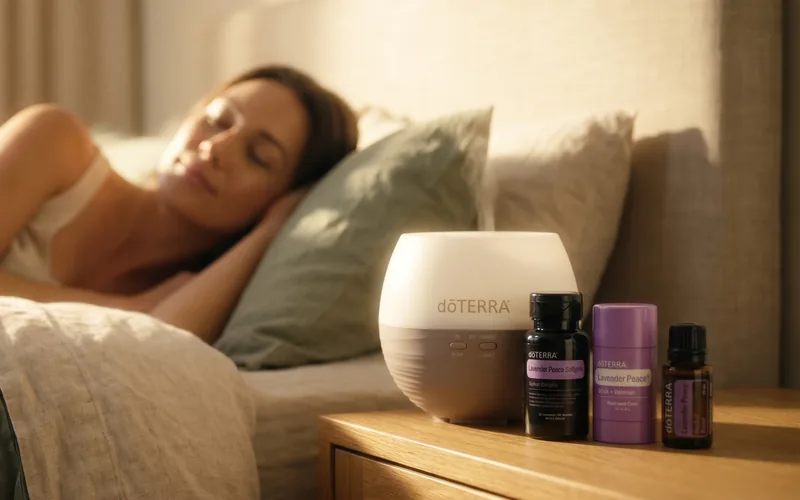
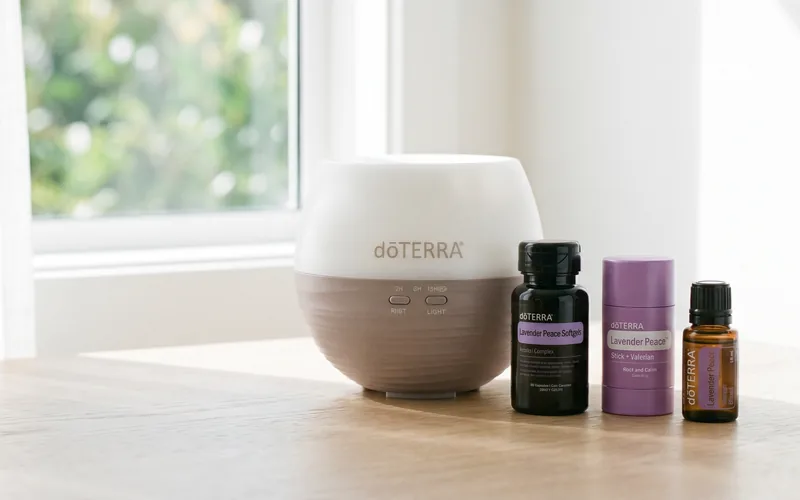
You don't need more products to research — you need a complete system that addresses both daytime anxiety accumulation and the night-time sleep environment. The Sleep Well Pack combines ARTG-listed therapeutic wellness products with aromatherapy in a 4-step protocol: Lavender Touch through the day (traditionally used in aromatherapy to reduce symptoms of stress), then three complementary products at night — Lavender Peace Softgels (traditionally used in Western herbal medicine to decrease, reduce, and relieve sleeplessness), the Lavender Peace Stick for concentrated topical aromatherapy as you get into bed, and the Lavender Peace Restful Blend diffusing through the night. Everything is ARTG-listed or CPTG® certified, pre-formulated, and ready to use — including the diffuser if you don't have one.
What to expect.
- The aroma is immediate — aromatherapy works through your olfactory system the moment you inhale; it's not a delayed-release pharmaceutical.
- Routine establishment takes 7–14 days — consistent repetition creates the aromatic-anchoring effect.
- It won't "knock you out" — oils support your natural transition to sleep rather than suppressing your nervous system, so you wake refreshed rather than groggy.
- Individual variation is normal — some respond more to lavender, others to grounding cedarwood and vetiver; blends remove some of the guesswork.
- Consistency beats perfection — missing a night doesn't reset progress, but sporadic use prevents the routine from establishing.
If you have a diagnosed anxiety disorder, severe panic attacks, or chronic insomnia, essential oils should complement professional treatment rather than replace it. Consult your healthcare provider about integrating aromatherapy into your broader treatment plan.
Common questions about essential oils for anxiety and sleep.
Can essential oils really help with anxiety?
Essential oils won't cure anxiety disorders, but aromatherapy can support anxiety management as part of a comprehensive approach. Lavender is traditionally used in aromatherapy to reduce symptoms of stress, and aromatic anchoring creates associations that signal your nervous system it's safe to downshift. It's particularly effective for situational stress rather than clinical anxiety disorders — the key is realistic expectations.
Are essential oils safe to use every night?
Yes, when using pure, high-quality essential oils. They work with your body's natural processes — no tolerance buildup, no morning grogginess. dōTERRA Lavender and Lavender Peace Softgels are ARTG-listed. Consult your healthcare provider if you have specific health concerns, are pregnant or nursing, or take prescription medications.
What if I'm taking anxiety medication?
Consult your healthcare provider before combining essential oils with prescription anxiety medications. Many people use aromatherapy to complement their anxiety management while taking medication, but this decision should be made with professional guidance, not assumptions.
Which is better — lavender or valerian?
They offer different aromatic experiences and work best together. Lavender provides clean, floral, universally calming aromatics; valerian offers strong, earthy, grounding qualities most people prefer in a blend. Pre-formulated products like the Lavender Peace Restful Blend combine both for synergy you can't achieve with single oils — you don't need to choose.
Can I use essential oils for panic attacks?
Essential oils can support general anxiety management, but acute panic attacks require professional medical care. Aromatherapy can be part of a broader strategy that reduces overall anxiety levels, but during an active panic attack you need crisis-intervention techniques taught by mental health professionals. If you have a diagnosed panic disorder, talk to your doctor about how essential oils might complement your treatment.
How long until I notice results?
You'll experience the aromatic benefits immediately — the calming scent works the moment you inhale. Routine establishment takes longer: plan for 7–14 days of consistent use before your nervous system fully adapts to the aromatic-anchoring effect. Some notice improvement within a few days; others need the full two weeks.